

AWD vs 4WD vs 2WD: Which Drivetrain Is Right for You?
Understanding Your Drivetrain
As you walk around our lot at John Holt Chevrolet, you will notice that most of the vehicles have several different acronyms on their window stickers. Beyond trim levels, engine sizes, and safety packages, one of the biggest impacts on your daily driving experience will be the type of drivetrain your vehicle uses. The decision to purchase an All-Wheel Drive, Four-Wheel Drive, or Two-Wheel Drive vehicle goes beyond simply comparing technical specifications. Your choice depends on how you intend to use your vehicle and the confidence you wish to have when unexpected Oklahoma weather strikes.
The Simplicity of Two-Wheel Drive
Many drivers consider Two-Wheel Drive to be the “default” option. In this configuration, the vehicle’s engine provides power to two wheels; either the front two or the back two. Modern sedans and small crossover SUVs commonly utilize Front-Wheel Drive. This is ideal for improving fuel economy since the vehicle is lighter and contains fewer components that require power. Additionally, due to the engine being positioned directly above the drive wheels, Front-Wheel Drive vehicles tend to provide good traction during rainy conditions. Rear-Wheel Drive is frequently featured in our performance vehicles (e.g., Chevrolet Camaro) and our heavy-duty work trucks. Rear-Wheel Drive creates a balanced sensation and improves vehicle stability when hauling heavy loads. For commuters who primarily travel on paved roads in fair weather, 2WD is typically the most cost-effective option. Generally speaking, 2WD vehicles cost less initially and save drivers money at the gas station over time.

The Versatility of All-Wheel Drive
All-Wheel Drive has increased in popularity over recent years, especially among families purchasing SUVs such as the Chevrolet Equinox and Traverse. A primary benefit of AWD is its ability to proactively adapt to changing road conditions. Using sensors to continuously monitor wheel slippage, AWD systems automatically redirect power from wheels that lose traction on slippery patches of road to those that retain traction. Perhaps the greatest advantage of AWD for most drivers is the fact that they do not need to take any action. Unlike 4WD systems that require manual engagement, AWD systems automatically perform all necessary adjustments based on sensor readings. Therefore, AWD is primarily intended to enhance on-road safety by enabling drivers to confidently maneuver through a sudden thunderstorm or a light covering of snow. Although AWD adds additional weight to the vehicle, many of our customers view this as a reasonable trade-off for increased stability and added security.
The Power of Four-Wheel Drive
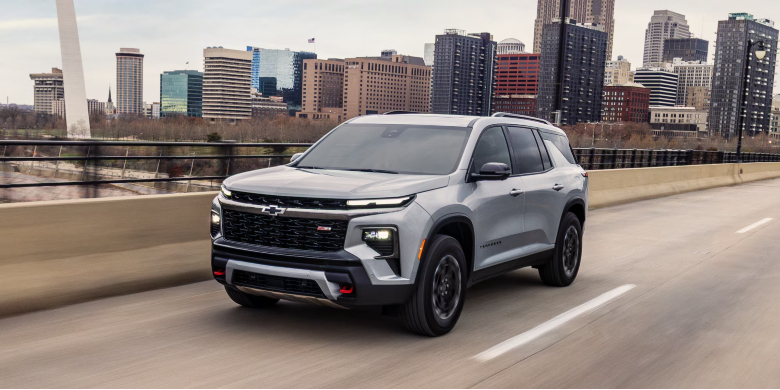
When individuals refer to “rugged capability,” they are generally referring to Four-Wheel Drive. Although AWD is beneficial for navigating slippery roads, 4WD is specifically designed for tougher conditions. Our Silverado trucks and Tahoe SUVs are equipped with 4WD. Unlike AWD systems that constantly analyze road conditions, 4WD systems are activated manually by drivers as needed. When activated, 4WD systems lock the front and rear axles together so that all four wheels rotate at identical speeds. This feature is crucial if you are venturing off-road, navigating through deep mud, or attempting to tow a heavy trailer up a steep incline composed of loose gravel. 4WD offers maximum torque and pulling capability. However, since the front and rear wheels are locked together while utilizing 4WD, it should not be utilized on dry paved roads; otherwise, turning becomes problematic and excessive wear may occur within the drivetrain. Four-Wheel Drive is a specialized function that assists drivers in completing specific demanding tasks.

Frequently Asked Questions About Chevrolet Drivetrains
What is the fundamental difference between AWD, 4WD, and 2WD on Chevrolet vehicles?
2WD sends engine power to only two wheels for everyday highway efficiency, while AWD automatically shifts power to all four wheels as road conditions demand. 4WD is a heavy-duty, driver-selectable system designed for rugged off-roading, low-traction terrain, and maximum towing power.
Which Chevrolet vehicles typically feature AWD versus 4WD?
AWD is standard or available on crossover and car-based utility vehicles like the Trax, Equinox, Blazer, and Traverse. Meanwhile, rugged 4WD is built for Chevy’s truck-based platforms, including the Colorado, Silverado, Tahoe, and Suburban.
When should I use 2WD instead of AWD or 4WD on my Chevy?
Use 2WD for normal, everyday driving on dry, paved roads and highways. Operating in 2WD reduces mechanical wear on drivetrain components and optimizes fuel efficiency since power is sent to a single axle.
How does Chevrolet’s AutoTrac 2-speed transfer case manage 4WD modes?
AutoTrac allows drivers to electronically toggle between modes like 2 HI for dry roads, AUTO for shifting weather, and 4 HI or 4 LOW for severe off-roading. These settings let you manually adjust torque distribution to match changing road conditions and traction needs.
Is AWD or 4WD better for winter weather and snow driving in a Chevy?
AWD excels at everyday commuting on wet, lightly snowy, or regularly plowed roads because it adjusts automatically without driver intervention. 4WD is better suited for unplowed backroads, deep snow drifts, or icy terrain where locked power distribution is necessary.
John Holt Chevrolet
Visit our showroom today to test-drive your next vehicle and speak with our drivetrain experts.
- Address: 2501 US Highway 81, Chickasha, OK 73018
- Monday – Friday: 9:00 AM – 7:00 PM
- Saturday: 9:00 AM – 6:00 PM
- Sunday: Closed
- Phone: (405) 351-5129
